
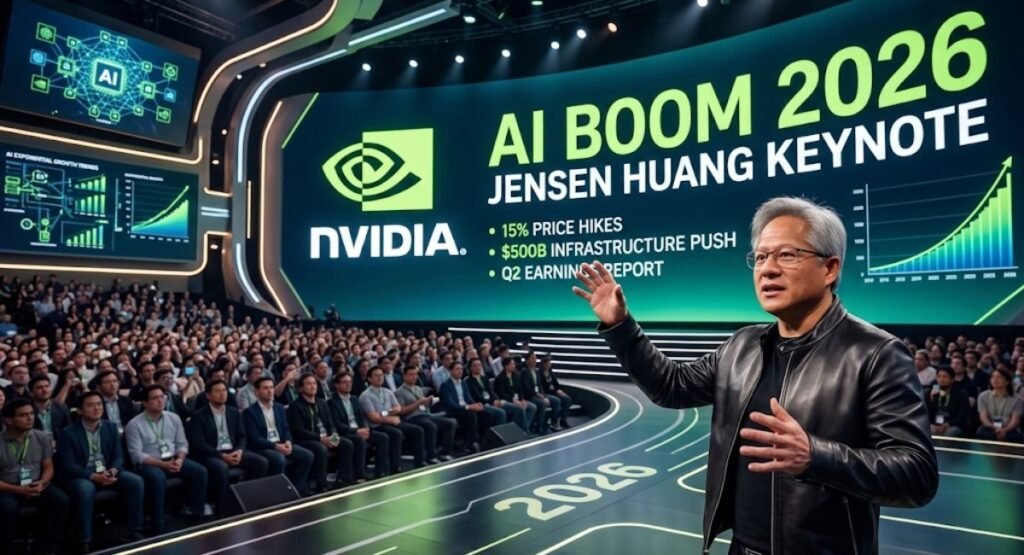
Quick Summary: The NVIDIA AI boom 2026 remains driven by massive AI infrastructure spending and demand for NVIDIA’s Blackwell systems. Investors are now watching the company’s Q2 earnings, reported server price increases, Vera Rubin development and a financing initiative targeting more than $500 billion in third-party capital for AI infrastructure.
NVIDIA CEO Jensen Huang is leading the company through one of the biggest AI infrastructure expansions in history. Under his leadership, NVIDIA has become a key force behind the global AI chip and data-center boom.
At the same time, reports indicate that some AI server systems using NVIDIA chips could see price increases of more than 15%, largely because of higher memory costs.
The NVIDIA AI boom 2026 continues to reshape the technology industry as demand for AI chips, data centers and advanced computing infrastructure reaches new levels. NVIDIA now faces a crucial earnings test, rising memory costs and growing pressure to deliver the next generation of AI hardware.
The company will release its fiscal second-quarter results on August 26, 2026. NVIDIA previously guided for approximately $91 billion in Q2 revenue, plus or minus 2%. Its first-quarter results showed just how strong AI demand remains, with revenue reaching $81.6 billion and Data Center revenue hitting $75.2 billion.
NVIDIA Q2 Earnings 2026: What Investors Expect
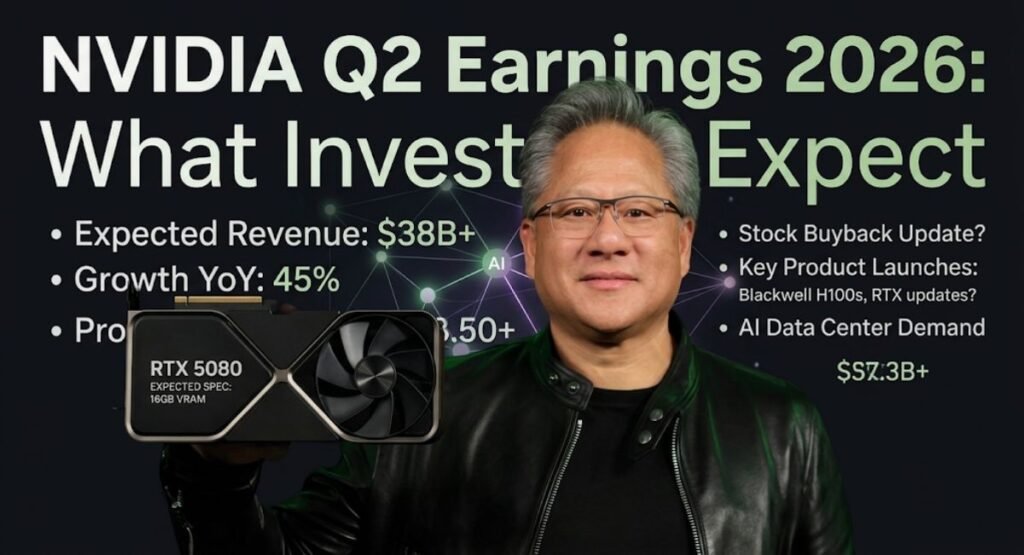
The biggest near-term event is the NVIDIA Q2 earnings 2026 report.
NVIDIA will announce its fiscal second-quarter results after the market closes on August 26, 2026. The company expects revenue of about $91 billion, with a 2% range above or below that figure.
Investors will focus on several numbers:
- Q2 revenue and earnings
- Data Center revenue
- Blackwell demand
- Gross margins
- Vera Rubin progress
- China-related sales
- AI infrastructure spending
- Forward guidance
NVIDIA has already set a high standard. A strong result may not be enough if management gives investors a weaker outlook for future quarters.
NVIDIA 15% Price Increase: What It Means
The NVIDIA 15% price increase story has attracted attention across the AI hardware market.
According to a recent report, some major customers have been informed that prices for AI server systems containing NVIDIA chips could rise by more than 15%. The reported increases are linked mainly to higher memory costs and could affect systems shipping in early 2027.
However, this does not mean NVIDIA will raise every product price by 15%.
Depending on the chip generation and memory setup, the actual increase may differ. NVIDIA had not officially confirmed the reported pricing changes when the report was published.
For investors, the key issue is how higher component costs affect the broader AI supply chain and NVIDIA’s margins.
NVIDIA AI Server Prices Are Rising
The NVIDIA AI server prices story reflects a much larger challenge facing the industry.
AI data centers require GPUs, high-performance memory, networking equipment, cooling systems and enormous amounts of electricity. As companies build larger AI facilities, demand for these components continues to increase.
Higher memory costs can push up the price of complete AI systems.
That creates two possible outcomes. NVIDIA and its partners could pass higher costs to customers, or companies across the supply chain could absorb some of the increase and accept lower margins.
NVIDIA’s Q2 gross-margin commentary will therefore deserve close attention.
NVIDIA $500 Billion AI Infrastructure Push
Another major development involves NVIDIA’s $500 billion AI infrastructure financing initiative.
In order to raise over $500 billion in outside funding for AI infrastructure, NVIDIA has teamed up with significant financial institutions to develop finance platforms.
This does not mean NVIDIA plans to spend $500 billion of its own cash.
Instead, the initiative aims to connect AI infrastructure projects with institutional financing. Companies can then access capital to build data centers and expand computing capacity.
The move highlights the enormous amount of money required to support the next stage of the AI industry.
NVIDIA AI Chip Demand Remains Strong
The central driver behind the NVIDIA AI boom 2026 remains demand for AI computing.
NVIDIA’s Data Center business generated $75.2 billion in Q1 fiscal 2027 revenue, up 92% from the previous year.
Cloud providers and large technology companies continue to invest heavily in AI infrastructure. These companies need large quantities of GPUs and networking products to train and operate increasingly sophisticated AI models.
That demand gives NVIDIA a major advantage.
However, investors now want to know whether this growth can continue at the same pace.
Blackwell and NVIDIA Vera Rubin
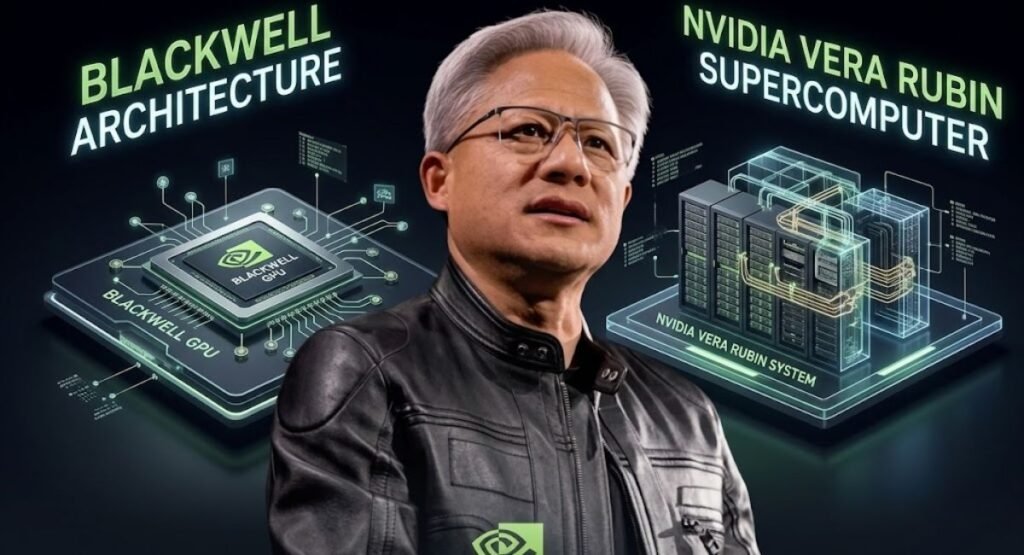
NVIDIA’s current AI strategy centers heavily on its Blackwell platform, while NVIDIA Vera Rubin represents the next major step in its AI computing roadmap.
Vera Rubin targets advanced workloads, including increasingly complex agentic AI applications.
The transition between product generations matters because customers need to keep upgrading their computing infrastructure. If NVIDIA can maintain strong Blackwell demand while customers prepare for Vera Rubin, the company could extend its growth cycle.
Investors will watch management’s comments about production, customer orders and deployment schedules during the upcoming earnings call.
NVIDIA Data Center Spending Is the Key Metric
The company’s Data Center business remains the most important part of its financial story.
Q1 Data Center revenue reached $75.2 billion, making it the primary source of NVIDIA’s growth.
That makes NVIDIA data center spending an important indicator for the entire AI market.
Microsoft, Google, Amazon and other major technology companies continue to invest billions in AI infrastructure. NVIDIA benefits when those companies increase their computing capacity.
But the market has started asking a more difficult question: Can AI companies generate enough revenue from these investments to justify the enormous spending?
That question could influence NVIDIA’s long-term valuation.
NVIDIA Stock 2026: What Could Move the Price?
The NVIDIA stock 2026 outlook will depend heavily on expectations surrounding AI growth.
Investors should watch:
Revenue: Can NVIDIA meet or exceed its $91 billion Q2 guidance?
Data Center growth: Does AI infrastructure demand remain strong?
Margins: Can the company manage higher memory and component costs?
Blackwell: Are customer orders continuing at a strong pace?
Vera Rubin: When will the next-generation platform become a meaningful revenue driver?
China: NVIDIA’s current Q2 outlook does not assume Data Center compute revenue from China.
Guidance: What does management expect for the rest of fiscal 2027?
These factors could matter more to investors than the headline earnings number.
NVIDIA’s growth story also reflects the wider technology wealth created by entrepreneurs such as Elon Musk.
Is the NVIDIA AI Boom Sustainable?
The NVIDIA AI boom 2026 has created extraordinary demand, but the industry faces a major test of sustainability.
Companies must spend billions on GPUs, data centers, electricity, networking and cooling before they can generate returns from AI services.
NVIDIA’s financing initiative shows how quickly infrastructure requirements are growing. Higher server costs could increase that burden even further.
At the same time, competition from AMD, custom cloud chips and other AI hardware providers could put pressure on NVIDIA over time.
The company therefore needs to maintain its technology advantage while helping customers justify their AI spending.
What to Watch in Q2 Earnings
NVIDIA’s August 26 earnings report could provide important clues about the next stage of the AI cycle.
The most important areas include:
- Data Center revenue growth
- Blackwell demand
- Gross margins
- Memory costs
- Vera Rubin development
- AI infrastructure financing
- China sales
- Customer capital spending
- Future revenue guidance
A major revenue beat could strengthen confidence in the AI growth story. However, investors may react negatively if NVIDIA delivers strong numbers but lowers future expectations.
Bottom Line
The NVIDIA AI boom 2026 remains one of the biggest technology stories of the year. NVIDIA enters its Q2 earnings report with approximately $91 billion in revenue guidance, record Data Center demand and strong interest in its next-generation AI platforms.
Reported NVIDIA AI server price increases above 15% add a new factor to the story, while the company’s financing initiative aims to mobilize more than $500 billion in third-party capital for AI infrastructure.
For investors, the key question is whether NVIDIA can maintain exceptional AI chip demand while managing higher costs, competition and increasingly expensive data-center investments.
FAQs
1. What is driving the NVIDIA AI boom in 2026?
Strong demand for AI chips, Blackwell systems, data centers and advanced computing infrastructure is driving NVIDIA’s growth.
2. When is NVIDIA Q2 earnings 2026?
NVIDIA is scheduled to release its fiscal Q2 results on August 26, 2026.
3. What is NVIDIA’s Q2 revenue forecast?
NVIDIA expects approximately $91 billion, plus or minus 2%, in fiscal Q2 revenue.
4. Is NVIDIA increasing prices by 15%?
Reports say some AI server systems could become more than 15% more expensive because of higher memory costs.
5. What is NVIDIA’s $500 billion AI plan?
It is a financing initiative designed to mobilize more than $500 billion in third-party capital for AI infrastructure.
6. What is NVIDIA Vera Rubin?
Vera Rubin is NVIDIA’s next-generation AI computing platform for advanced AI workloads.
7. Why is NVIDIA Data Center revenue important?
Data Center is NVIDIA’s largest business and a key measure of global AI infrastructure demand.
8. What should investors watch in NVIDIA’s Q2 earnings?
Investors should watch revenue, Data Center growth, margins, Blackwell demand, Vera Rubin, China and forward guidance.

Welcome to Tycoon info! I’m Malik , an SEO specialist, and content writer with 6 years of experience.
I help websites rank higher, grow traffic, and look amazing. My goal is to make SEO and web design simple and effective for everyone.
Let’s achieve more together!