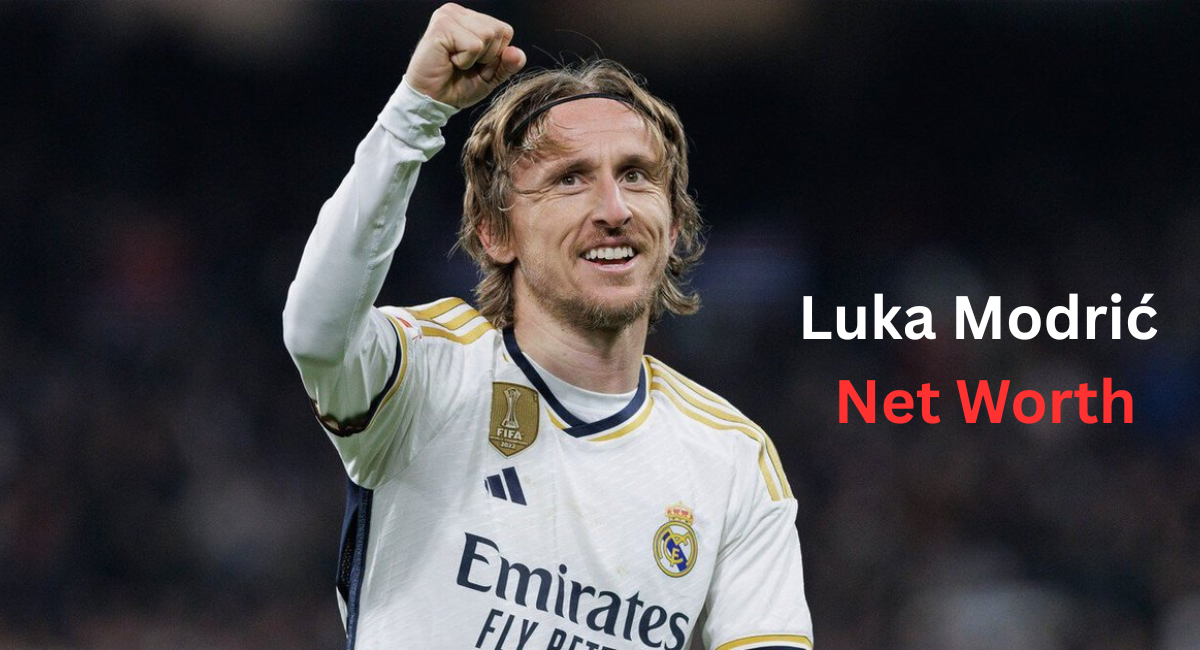
Quick Summary: Luka Modrić is a Croatian football legend and one of the greatest midfielders of his generation. After 13 successful seasons with Real Madrid, six Champions League titles, and the 2018 Ballon d’Or, he joined AC Milan in 2025 and remains an active player under contract through June 2027. Luka Modrić’s net worth is estimated at around $75 million, built through football salaries, endorsements, investments, and other commercial income.
What Is Luka Modrić’s Net Worth 2026?
Luka Modrić’s net worth is estimated at $75 million in 2026, according to Forbes. His fortune comes from more than two decades of football salaries, bonuses, endorsements, appearance income, investments, and commercial opportunities. Celebrity Net Worth also lists a historical annual salary figure of around $11 million, reflecting his high-earning years at Real Madrid rather than his current AC Milan compensation.
Modrić remains an active professional footballer. AC Milan announced on July 23, 2026, that he had signed a new contract running through June 30, 2027, extending his stay in Italy for another season. The club said he made 37 appearances and scored two goals during his first Milan campaign and will continue wearing the No. 14 shirt.
His current financial position reflects the extraordinary length of his career. Modrić spent 13 seasons at Real Madrid, where he became the club’s most decorated player and won six Champions League titles. He then joined Milan in 2025, adding another major European league to an already remarkable career.
Current salary estimates vary. Capology estimates his 2026–27 gross fixed salary at approximately €6.48 million, while Italian reports put his net salary at about €3.5 million. Because neither figure represents a complete publicly disclosed contract, they should be treated as estimates.
The wealth story behind Luka Modrić’s net worth therefore includes several distinct stages: his early career in Croatia, his Tottenham breakthrough, his record-setting Real Madrid years, and his current role as a veteran leader at AC Milan.
Contracts And Salary
Luka Modrić’s salary increased significantly as he moved from Croatian football into the Premier League and then Real Madrid.
Modrić began his senior career with Dinamo Zagreb before developing through loan spells at Zrinjski Mostar and Inter Zaprešić. When Tottenham signed him in 2008, the reported transfer fee reached approximately £16.5 million. He spent four seasons in England and became one of the Premier League’s most highly regarded midfielders.
Real Madrid signed Modrić in 2012 for a reported initial fee of around €35 million. Over the following years, the club repeatedly renewed his contract because of his importance to the midfield. Celebrity Net Worth estimates his peak Real Madrid salary at about $11 million per year.
The strongest evidence of his value came from longevity. While many players see their earnings decline sharply in their mid-30s, Modrić continued receiving extensions at Madrid based on performance and fitness.
His move to AC Milan in 2025 created a new financial chapter. The club initially signed him through June 2026 with an option for another season, then exercised that continuation by signing him through June 2027.
Italian reporting says Modrić’s 2026–27 deal carries a €3.5 million net salary, while other football salary databases calculate a higher gross figure. The difference illustrates why salary estimates should be presented carefully rather than as exact official numbers.
His estimated career wages have reached well above $100 million, according to salary databases, before adding sponsorship income and other commercial revenue. SalarySport currently estimates his total career wages at about $187.9 million, although its historical figures remain estimates and should not be confused with audited earnings.
Early Life

Luka Modrić was born on September 9, 1985, in Zadar, Croatia. He grew up during a turbulent period. His childhood experiences shaped his resilience and determination to become a professional footballer.
He entered Dinamo Zagreb’s youth system as a teenager and quickly showed unusual technical ability. Coaches recognized his vision and passing, but his small frame made his path to elite football less straightforward.
His development included loan spells away from Dinamo. He spent time with Zrinjski Mostar in Bosnia and Herzegovina and Inter Zaprešić in Croatia, gaining physical experience and regular senior football before returning to Dinamo.
Modrić’s playing profile became clear early. He relied on close control, quick turns, body positioning, and intelligent passing rather than physical strength.
His height remains one of the most searched details about the midfielder. Modrić stands around 1.74 meters, or 5 feet 9 inches, according to Celebrity Net Worth.
The contrast between his relatively small stature and his enormous career became one of his defining features. He eventually turned those early doubts into a career featuring Champions League titles, a Ballon d’Or, a World Cup final, and more than 200 international appearances.
Career
Modrić’s professional career began with Dinamo Zagreb, where he became one of Croatia’s best young midfielders. He returned from his loan spells and made 128 appearances with 32 goals, winning three Croatian league titles, two Croatian Cups, and one Croatian Super Cup.
Tottenham then brought him to England in 2008. Modrić quickly became central to the team’s midfield and eventually helped Spurs reach the 2010–11 Champions League quarter-finals.
His ability to control tempo attracted Real Madrid. The Spanish giants signed him in 2012, beginning the most successful chapter of his career.
At Madrid, Modrić formed a legendary midfield partnership with Toni Kroos and Casemiro. The trio controlled games through passing, movement, positional discipline, and technical quality.
Real Madrid’s official records, summarized by AC Milan, credit Modrić with 597 appearances and 43 goals during his 13 seasons at the club. He has also won 6 Champions League titles, 5 Club World Cups, a single Intercontinental Cup, 5 European Super Cups, 4 LaLiga titles, 2 Copa del Rey trophies, and 5 Spanish Super Cups.
Modrić left Real Madrid as the most decorated player in the club’s history.
His most important individual season came in 2018. After helping Croatia reach its first World Cup final, he won the Ballon d’Or, ending the long Cristiano Ronaldo–Lionel Messi dominance of the award. AC Milan describes the prize as the crowning achievement of his career.
Modrić left Real Madrid in 2025 after the club’s FIFA Club World Cup campaign and joined AC Milan as a free agent. He quickly established himself as an experienced midfield leader in Serie A.
The continued demand for a Luka Modrić jersey shows how strong his football identity remains even after his Madrid departure. Fans still search for Real Madrid shirts while Milan supporters now have the AC Milan Luka Modrić jersey to represent his newest chapter.
Luka Modrić’s career spans one of the most competitive eras in modern football. His Real Madrid years placed him alongside Cristiano Ronaldo, Karim Benzema, Sergio Ramos, Neymar, Mohamed Salah, Kevin De Bruyne, Jude Bellingham, and Erling Haaland, while his long-term influence can also be compared with legends such as David Beckham.
Endorsements
Endorsements have contributed significantly to Luka Modrić’s net worth throughout his career.
His commercial appeal comes from a combination of elite performance, longevity, international recognition, and a relatively low-profile personality. Brands can market Modrić as a world-class athlete without relying on controversy or exaggerated celebrity behavior.
His sponsorship income has included sportswear and football-related partnerships. His image has appeared in commercial campaigns, football products, gaming promotions, and memorabilia markets.
The demand for the Luka Modrić jersey, Luka Modrić jerseys, and Luka Modrić shirt remains strong because supporters associate him with Real Madrid’s most successful modern era.
His move to Milan has also created a new merchandise market. Searches for an AC Milan Luka Modrić jersey and Milan No. 14 shirt increased naturally after the club confirmed his contract extension in July 2026. AC Milan officially confirmed that he will continue wearing No. 14 through June 2027.
Collectors also look for a Luka Modrić signed jersey, match-worn shirts, football cards, and memorabilia connected with his Ballon d’Or-winning season.
His commercial value does not come only from products. Modrić’s international profile gives sponsors access to audiences across Croatia, Spain, Italy, and the wider global football market.
Personal Life
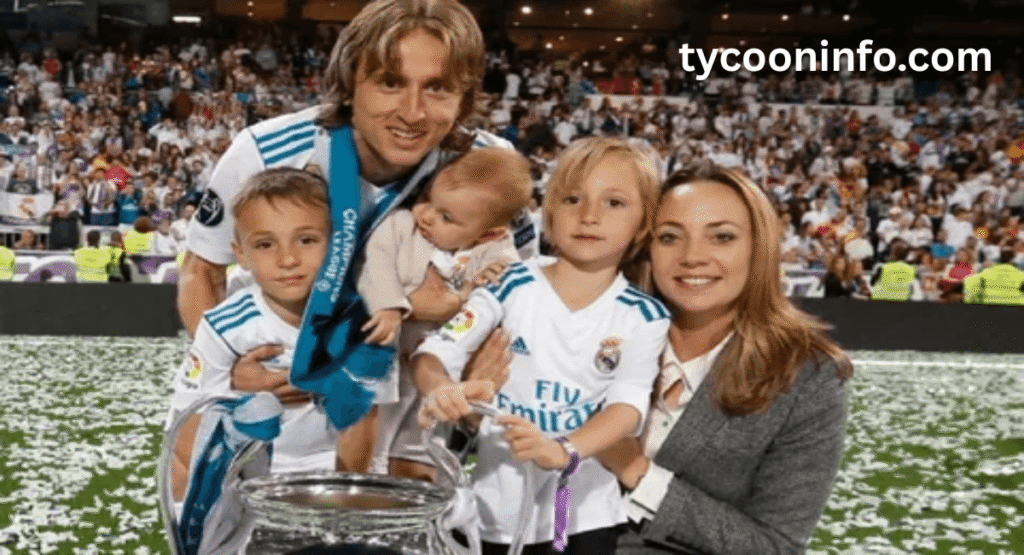
Luka Modrić has been married to Vanja Bosnić since 2010. The couple has three children.
Modrić has generally kept his family life private and away from the constant attention that follows many football celebrities. He occasionally shares family moments but rarely turns his personal life into a major part of his public brand.
His calm personality contrasts with the pressure he has handled throughout his football career. The midfielder has repeatedly played at the highest level while managing the physical demands of an unusually long career.
His family also remained connected to his football journey during his years at Real Madrid and now in Milan.
The question “how old is Luka Modrić?” has become especially popular because he continues playing at an age when many midfielders have already retired. Born September 9, 1985, he is 41 years old in September 2026.
Despite his age, he has not announced retirement. AC Milan extended his contract to June 2027, confirming that he intends to continue competing at the top level.
Legal Issues
Modrić has faced legal scrutiny connected mainly to his financial affairs in Spain rather than incidents on the football pitch.
In 2018, Spanish prosecutors investigated allegations that Modrić and his wife used corporate structures to manage image-rights income and reduce their tax liability. Spanish media reported that prosecutors sought a significant prison sentence, although Modrić ultimately settled with Spanish authorities.
He agreed to pay approximately €1.3 million as part of the resolution of the tax case, according to contemporary reports. The case did not end his football career or prevent him from continuing at Real Madrid.
The controversy became particularly notable because it occurred in the same period when Modrić won the 2018 Ballon d’Or and led Croatia to the World Cup final.
His legal history should not overshadow the broader financial picture. Luka Modrić’s net worth reflects years of football earnings and commercial income, while the tax case illustrates the importance of distinguishing gross earnings from personal wealth after taxes and financial obligations.
Public reporting around the case also demonstrates why estimated net-worth figures can never perfectly reproduce a private individual’s financial position.
Real Estate
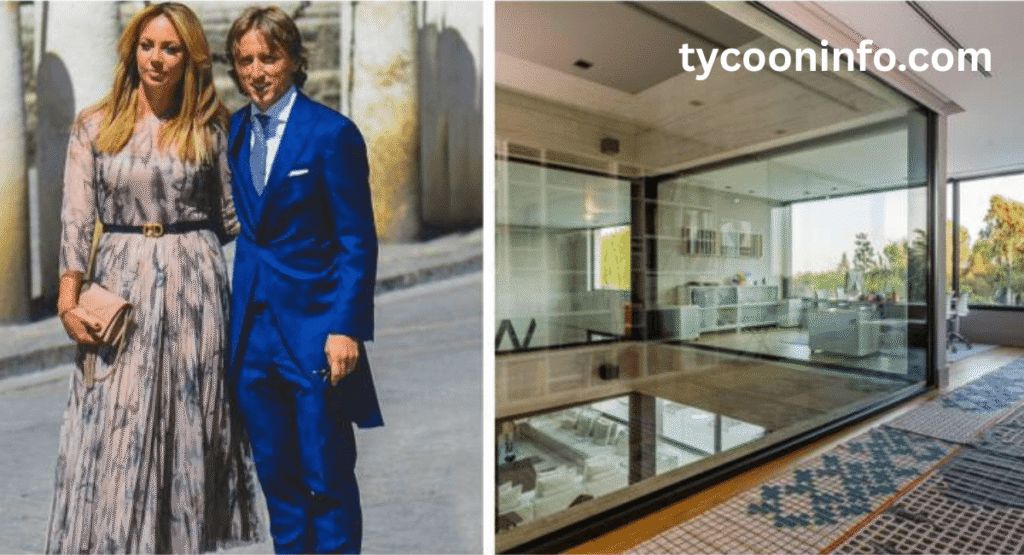
Real estate represents another component of Luka Modrić’s net worth.
During his Real Madrid years, Modrić invested in luxury residential property in Spain. He and his family have been associated with high-value homes in Madrid, including properties in exclusive residential areas used by several elite footballers.
His real-estate activity has generally attracted less attention than the property portfolios of more celebrity-focused athletes. Modrić has maintained a comparatively private lifestyle and has not built his public image around luxury homes.
That privacy makes exact property valuations difficult to verify. Private purchases, renovations, mortgages, and sales do not always appear in publicly accessible records.
Still, property ownership provides an important long-term wealth component for a player who spent more than a decade earning elite European football salaries.
His overall financial trajectory is unusually strong because he combined high wages with extraordinary longevity. He continued earning major contracts into his late 30s and early 40s rather than retiring after his peak years.
The latest evidence also settles the question “Did Luka Modrić retire?” No. AC Milan confirmed in July 2026 that he signed a new deal through June 30, 2027, while recent reporting confirmed that he remains available for Croatia’s Nations League matches after the 2026 World Cup.
FAQs
1. What Has Happened to Luka Modrić?
Luka Modrić left Real Madrid in 2025 and joined AC Milan as a free agent. Milan extended his contract through June 30, 2027, and he remains an active professional footballer.
2. Is Luka Modrić a Billionaire?
No. Luka Modrić is not a billionaire. Celebrity Net Worth currently estimates his personal net worth at around $75 million.
3. What Is the Sad Story of Modrić?
Modrić experienced a difficult childhood during the Croatian War of Independence. His family became displaced, and his grandfather was killed during the conflict. Despite those hardships, he continued developing as a footballer and eventually became a Ballon d’Or winner and one of Croatia’s greatest players.
4. Who Is Better, Kevin De Bruyne or Modrić?
Both are exceptional midfielders, but the answer depends on style. De Bruyne offers more direct chance creation and assists, while Modrić provides exceptional control, passing, press resistance, and longevity. Modrić has the stronger trophy and individual-award résumé.
5. Who Is Better, Zidane or Modrić?
Zinedine Zidane and Luka Modrić played different styles and eras. Zidane had extraordinary technical flair and dominated major matches, while Modrić combined creativity with remarkable consistency over a much longer career. Modrić’s six Champions League titles and 2018 Ballon d’Or strengthen his case, while Zidane has a World Cup and Euro title with France.
6. Is Neymar Better Than Modrić?
They play different positions, so a direct comparison is difficult. Neymar offers elite dribbling, creativity, and attacking production, while Modrić controls games from midfield and contributes through passing, positioning, and tempo management. For midfield influence and career longevity, Modrić has the stronger case.
7. Is Kroos or Modrić Better?
Both formed one of football’s greatest midfield partnerships at Real Madrid. Toni Kroos was exceptional at controlling tempo and delivering precise long-range passing, while Modrić offered more dribbling, ball carrying, defensive work, and individual creativity. Modrić’s 2018 Ballon d’Or gives him a slight edge in individual recognition.
8. Who Is Better, Özil or Modrić?
Mesut Özil was an outstanding creative playmaker, particularly in his final pass and chance creation. Modrić offers a more complete midfield game, combining creativity with defensive contribution, ball carrying, pressing, and game control. Based on overall career achievements and longevity, Modrić has the stronger résumé.

Welcome to Tycoon info! I’m Malik , an SEO specialist, and content writer with 6 years of experience.
I help websites rank higher, grow traffic, and look amazing. My goal is to make SEO and web design simple and effective for everyone.
Let’s achieve more together!