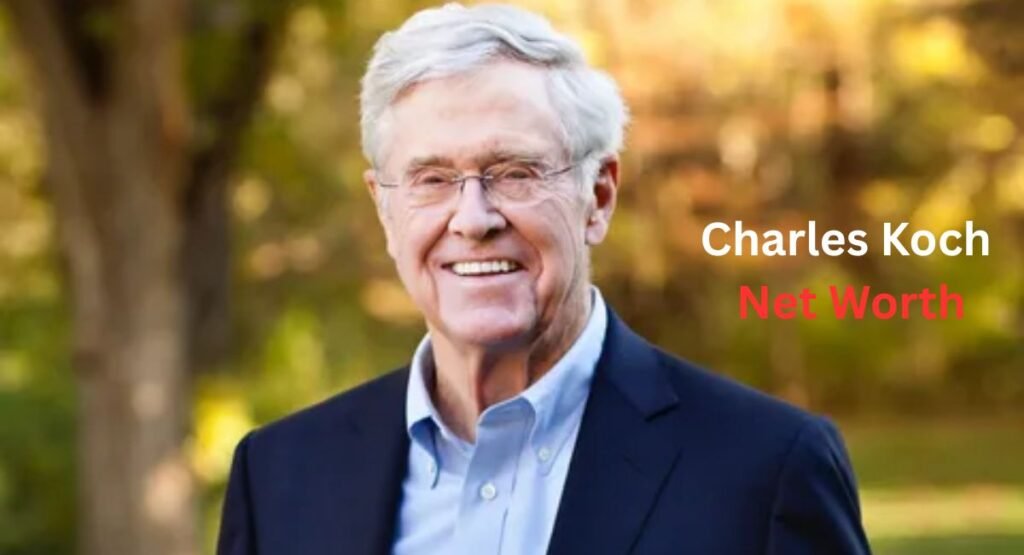
Summary: Charles Koch is an American billionaire businessman, investor, and philanthropist best known for leading Koch Industries, one of the largest privately held companies in the United States. He became chairman and CEO of the family business in 1967 and helped transform it from an oil-focused company into a diversified global enterprise. His wealth primarily comes from his ownership in Koch, while his public influence also comes from philanthropy, management ideas, and policy organizations.
What Is Charles Koch’s Net Worth 2026?
Charles Koch is an American billionaire businessman, investor, philanthropist, and longtime leader of Koch, one of America’s largest private companies. He has led the family business for decades and helped transform it from a relatively small oil-focused company into a diversified group with businesses spanning manufacturing, agriculture, energy, consumer products, technology, healthcare, logistics, real estate, and investments.
For readers researching Charles Koch net worth, the key point is that his fortune comes primarily from his ownership interest in Koch and the long-term expansion of the family business. His wealth estimate changes with private-company valuations, so a dated figure is more useful than treating one number as permanent.
Charles Koch has also built a public profile through Charles Koch Foundation, Stand Together, education initiatives, public-policy organizations, and his writings on management and entrepreneurship.
Growing Up in Wichita
Charles G. Koch came into the world on 1st November, 1935, in Wichita, Kansas. He grew up in a family whose business interests were closely connected to oil and engineering.
His father, Fred C. Koch, helped establish the business that eventually became Koch Industries. Charles grew up around engineering, business, and discussions about how companies could improve their operations.
Unlike a businessman who entered a mature corporate environment, Charles returned to Wichita at a time when his father’s company still had considerable room to expand. That allowed him to apply the technical and economic ideas he had developed during his education.
His early interest in science and economics became an important part of his later management philosophy. Koch’s official biography says he continues to develop his management framework with employees, scholars, nonprofit leaders, and other business leaders.
Inheriting and Growing Koch Industries
Charles Koch joined the family business in 1961 after completing his studies and gaining professional experience. His father wanted him to return to Wichita and help run the company.
When Fred Koch died in 1967, Charles became chairman and chief executive of the business. The company was then known as Rock Island Oil & Refining Company. In 1968, it adopted the name Koch Industries.
Charles did not simply preserve the existing business. He pushed Koch toward expansion, investment, and diversification.
During his leadership, Koch moved beyond its original oil and refining activities into a much broader collection of businesses. Today, Koch says its companies operate across areas including manufacturing, agriculture, consumer products, building materials, renewable energy, chemicals, electronics, software, healthcare technology, logistics, real estate, and investments.
Charles And David Koch
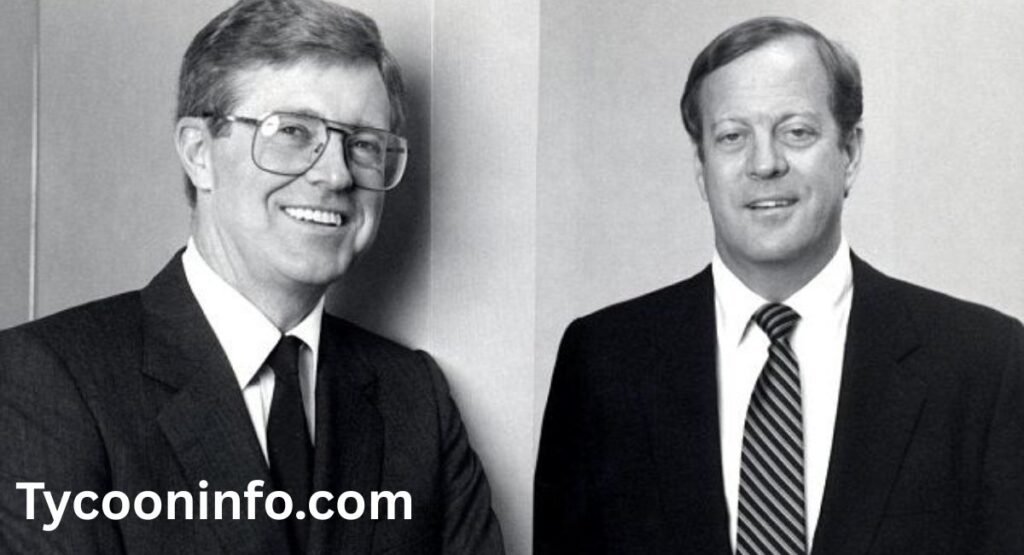
Charles and his younger brother David Koch became two of the most recognizable members of the Koch family.
David joined the family business and later became a major executive and public figure. The brothers also became associated with political and philanthropic activities, although their roles and interests were not identical.
The family business remained the foundation of their wealth. Charles eventually became the dominant long-term leader of the company, while David pursued business, philanthropy, and political activities alongside his Koch Industries career.
The Bitter Fight With His Brothers
The Koch family experienced a major internal dispute during the 1980s involving Charles and David Koch and their brothers Frederick and William Koch.
The disagreement centered on ownership, control, and the future direction of the family company. The dispute eventually resulted in Charles and David gaining greater control over Koch Industries.
That episode became an important turning point in the company’s history because Charles and David could then pursue their long-term strategy with greater control over the business.
The conflict also helps explain why discussions about Charles Koch’s family wealth often involve ownership structure rather than simply looking at company revenue.
After the dispute, Charles continued expanding Koch Industries and developing the management philosophy that became associated with the company’s growth.
How Koch Industries Actually Makes Money

Koch is a privately held company, so its financial structure differs from that of publicly traded corporations.
Unlike a public company that reports a constantly changing market capitalization, Koch does not have a daily stock price that investors can use to calculate the value of Charles Koch’s ownership.
Koch says its companies employ about 130,000 people worldwide, operate in more than 50 countries, and have annual revenues exceeding $125 billion. The company also says Koch businesses have invested more than $168 billion in growth and improvements since 2003.
Its portfolio an important explanation for the net worth of Charles Koch. His fortune does not depend on one product or one market.
How Koch Creates Long-Term Value
Koch describes its strategy as a long-term approach based on reinvesting earnings, developing capabilities, and investing in businesses where its capabilities can create value.
The company says its value has grown more than 9,000-fold since 1960, while it has historically reinvested about 90% of earnings into people, companies, and capabilities.
That strategy helps explain why Charles Koch’s wealth has remained connected to a private industrial empire rather than a single public stock.
His Unique Approach to Running a Company
One of Charles Koch’s most important contributions to the family business is his management philosophy.
For decades, Koch used a system called Market-Based Management, which later evolved into what the company calls Principle-Based Management.
The philosophy encourages employees to think about customers, value creation, experimentation, accountability, and long-term improvement.
Koch says Principle-Based Management focuses on creating value for others and helping people develop their capabilities. Charles Koch continues to work on the framework with employees and outside thinkers.
Charles Koch Books And Ideas
Charles Koch has written extensively about business, economics, management, and social progress.
His ideas draw heavily from economics and the study of how organizations make decisions. His interest in thinkers such as Friedrich Hayek, Joseph Schumpeter, and Ludwig von Mises influenced his understanding of markets and entrepreneurship.
His books and writings focus less on traditional corporate leadership formulas and more on creating organizations that can adapt, experiment, and develop individual capabilities.
For readers searching for Charles Koch books or Charles Koch books, his writings provide a window into the principles that shaped Koch’s management culture.
Power Behind the Scenes: Politics and Donations
Charles Koch has become one of the most influential American philanthropists in education, public policy, and economic research.
He established or contributed to the development of organizations such as Stand Together, the Cato Institute, the Mercatus Center at George Mason University, Youth Entrepreneurs, the Bill of Rights Institute, and the Charles Koch Foundation.
Charles Koch Foundation
The Charles Koch Foundation endorses initiatives centered on learning, investigation, open societies, business ventures, and personal opportunity.
The foundation has also supported universities and scholarship programs. For example, a partnership with UNCF began with a $25 million grant to support students interested in entrepreneurship, economics, and innovation. Charles Koch’s approach to building long-term wealth can also be compared with other major entrepreneurs and billionaires, including Bill Gates, Julia Koch, Mukesh Ambani, Thomas Peterffy, and Zhong Shanshan, whose fortunes developed through technology, family businesses, finance, consumer products, and strategic investments.
The broader Koch family has also contributed substantially to medical research, cultural institutions, and other charitable causes. Koch’s corporate website states that Charles Koch and the late David Koch have individually contributed over $2.4 billion to philanthropic initiatives.
Charles Koch Institute
The Charles Koch Institute has also been associated with educational programs focused on policy, economics, leadership, and professional development.
His philanthropy has attracted both supporters and critics, particularly because some organizations connected to Koch have engaged in public-policy debates.
For a balanced biography, it is important to distinguish his charitable work from political advocacy and to identify the organization involved rather than treating all Koch-funded activities as identical.
Decades at the Helm: His Leadership Style
Charles Koch’s leadership stands out because he has remained connected to the family company for more than five decades.
He became chairman and CEO in 1967, and in 2023 he became co-CEO as part of Koch’s evolving leadership structure. He remains chairman and co-CEO today.
His longevity has allowed him to shape Koch’s culture over several generations.
Rather than focusing exclusively on annual results, he has emphasized long-term investment, organizational learning, and the development of employees.
In 2025, Koch marked Charles Koch’s 90th birthday with an event attended by nearly 2,000 employees, friends, and family members. The company highlighted his decades of leadership and his continuing interest in principles of human progress.
Family and Life Outside Koch Industries
Charles Koch is married to Liz Koch. The pair has two kids, Elizabeth and Chase, and three grandkids. Koch’s official biography says Charles continues to reside in Wichita, Kansas, where he was born.
Charles Koch Age
On November 1, 1935, Charles Koch came into the world. He turned 90 in November 2025, making him 90 years old in 2026.
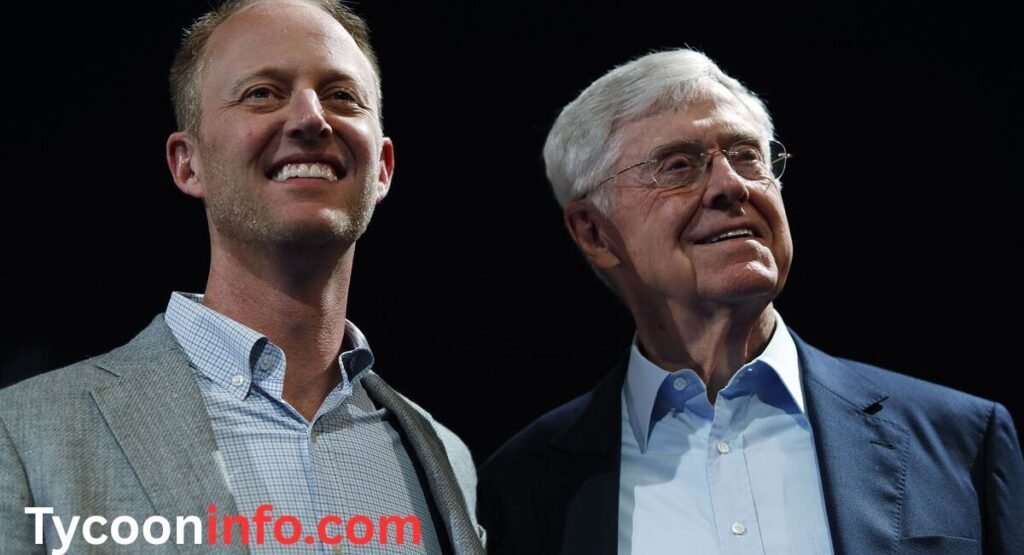
His age is significant when considering the transition of leadership within Koch. While Charles remains chairman and co-CEO, the company has increasingly highlighted younger leaders, including his son Chase Koch.
Charles Koch Education
Charles Koch studied at the Massachusetts Institute of Technology (MIT).
He earned:
- A bachelor’s degree in general engineering in 1957
- A master’s degree in nuclear engineering in 1958
- A master’s degree in chemical engineering in 1959
His technical education strongly influenced his analytical approach to business and management. Koch’s official biography confirms all three MIT degrees.
His education also helps explain why engineering, economics, experimentation, and systems thinking feature so prominently in his approach to management.
Recognition Over the Years
Charles Koch has received numerous honors for his business leadership, philanthropy, and community involvement.
Koch’s official biography notes that he has received three honorary doctorates, among other awards.
His recognition has come from both academic institutions and organizations that have worked with his philanthropic initiatives.
One example is George Mason University, which awarded Koch an honorary degree in recognition of his support for scholarships, faculty recruitment, research, and market-based approaches to social problems.
These honors reflect the two major areas of his public career: business leadership and philanthropy.
Homes and Property Holdings
Real estate represents one of the many areas connected to Koch’s broader investment interests.
However, Charles Koch has maintained a relatively private lifestyle compared with many billionaires. His official biography identifies Wichita, Kansas, as his residence.
Rather than building a celebrity-style real-estate portfolio, Koch has generally focused his wealth and attention on his business interests, investments, philanthropy, and ideas about management.
The Koch portfolio itself includes real estate as one of several investment categories, but the exact value of Charles Koch’s personal property holdings is not publicly established in the same way as the holdings of a publicly traded billionaire.
What He’s Focused on Today
Charles Koch remains actively involved with Koch as chairman and co-CEO.
His current work focuses heavily on long-term strategy, leadership development, and Principle-Based Management. Koch’s recent company materials show that he continues to participate in discussions about leadership and the principles behind the company’s growth.
His son Chase Koch has also taken on an increasingly visible role within the company and the wider Koch family’s activities.
In 2026, Koch highlighted Charles and Chase Koch’s discussions with interns about experimental discovery, contribution, leadership, and building meaningful careers.
This suggests that Charles Koch’s current role is not simply about running day-to-day operations. He remains involved in shaping the principles and leadership culture that he developed over decades.
What Makes Charles Koch’s Business Model Different?
Charles Koch’s career demonstrates how a private family company can grow through:
- Long-term ownership
- Diversification across industries
- Reinvestment of earnings
- Employee development
- Decentralized decision-making
- Continuous experimentation
- Investment in new capabilities
That combination helped transform Koch from an oil-focused family business into a highly diversified private enterprise.
For anyone researching Charles Koch net worth, understanding this business model provides more context than looking at a billionaire ranking alone.
Frequently Asked Questions
1- How Old Is Charles Koch?
Charles Koch was born on November 1, 1935, and turned 90 in November 2025. He is 90 years old in 2026.
2- What Is Charles Koch’s Net Worth?
Charles Koch is a billionaire whose wealth primarily comes from his ownership interest in Koch and the long-term growth of the private family business. Because Koch is privately held, estimates can vary.
3- Who Is Charles Koch?
Charles Koch is an American businessman, investor, philanthropist, and chairman and co-CEO of Koch. He has led the company since becoming chairman and CEO in 1967.
4- What Is Charles Koch’s Education?
He earned one bachelor’s degree and two master’s degrees from MIT, studying general engineering, nuclear engineering, and chemical engineering.
5- Where Does Charles Koch Live?
Charles Koch was born in Wichita, Kansas, and Koch’s official biography says he continues to reside there with his wife, Liz.
6- What Is the Charles Koch Foundation?
The Charles Koch Foundation is a philanthropic organization that supports education, research, and initiatives focused on individual opportunity, free societies, and human progress.
7- What Happened Between Charles And David Koch?
Charles and David Koch became major leaders of the family business after a dispute with their brothers over ownership and control. They eventually gained greater control of Koch Industries.
8- What Is Charles Koch Known For?
He is best known for transforming Koch into a diversified private company and developing the management philosophy originally known as Market-Based Management and now called Principle-Based Management.
9- Does Charles Koch Still Run Koch?
Yes. Koch currently identifies Charles Koch as chairman and co-CEO, a role he has held since the company’s leadership structure changed in 2023.
10- What Are Charles Koch’s Books About?
His books and writings primarily address management, entrepreneurship, economics, markets, individual opportunity, and the principles he believes help organizations create long-term value.

Welcome to Tycoon info! I’m Malik , an SEO specialist, and content writer with 6 years of experience.
I help websites rank higher, grow traffic, and look amazing. My goal is to make SEO and web design simple and effective for everyone.
Let’s achieve more together!