
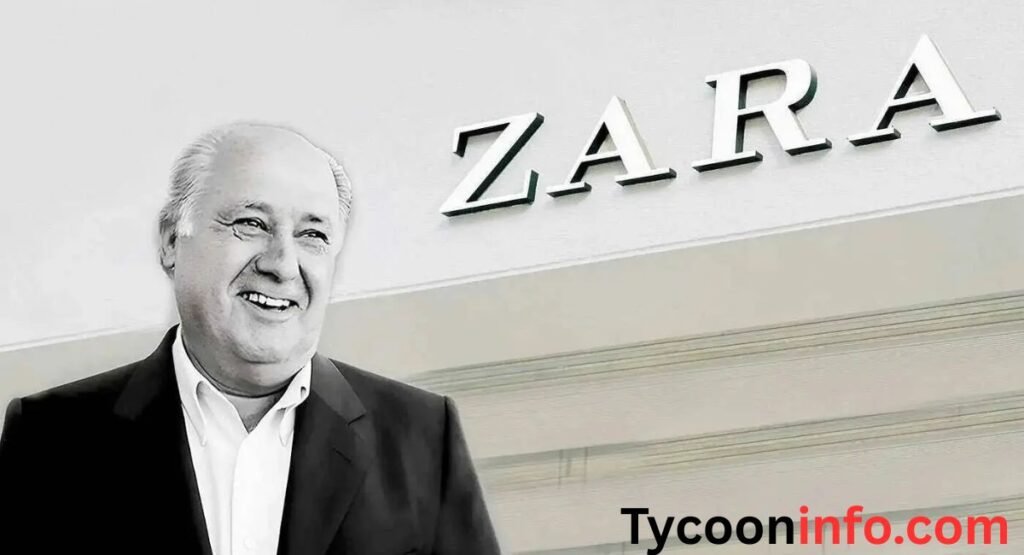
Quick Summary: Amancio Ortega is a Spanish billionaire entrepreneur, investor, and the founder of Zara, one of the world’s most recognized fashion brands. This comprehensive introduction to his life and empire explores how the co-founder of Inditex transformed global retail through a revolutionary fast-fashion business model. While industry analysts frequently contrast the founder of Zara net worth with the Louis Vuitton owner net worth, current estimates for Amancio Ortega net worth 2026 firmly solidify his position among the world’s most influential titans of industry.
The story of Amancio Ortega is a remarkable narrative of determination, strategic innovation, and long-term commercial success. Rising from humble beginnings to leaving school at a young age, Ortega proved that customer-centric supply chains and disciplined capital management could yield a global fashion behemoth. His entrepreneurial journey continues to serve as a benchmark for business leaders, retail strategists, and investors worldwide.
What Is Amancio Ortega’s Net Worth?
Amancio Ortega’s net worth is estimated to exceed $149 billion as of 2026, making him one of the world’s wealthiest entrepreneurs. His fortune comes primarily from his ownership stake in Inditex, the parent company of Zara, along with a massive portfolio of commercial real estate managed through Pontegadea. As a result, Amancio Ortega’s current net worth regularly places him among the richest people in Europe and the top global billionaires.
Many investors search for Amancio Ortega Gaona’s net worth, Amancio Ortega net worth in dollars, Amancio Ortega net worth today, and how much is Amancio Ortega worth because his wealth changes with the value of Inditex shares and his growing investment portfolio. His fortune has also benefited from consistent dividend payments, strategic acquisitions, and long-term investments in premium commercial properties across Europe, North America, and Asia.
Unlike many billionaires who diversify into numerous unrelated industries, Ortega has built his wealth through a disciplined investment strategy. His ownership of Inditex, one of the largest clothing retailers in the world, continues to generate significant annual dividends, while Pontegadea provides stable rental income from high-quality office buildings, hotels, and luxury retail properties. This measured strategy has contributed to the safeguarding of Amancio Ortega’s wealth amidst varying economic landscapes.
Over the years, Amancio Ortega’s net worth history has reflected the rapid growth of Zara and Inditex. His wealth increased significantly after Inditex went public in 2001, allowing investors to recognize the company’s global value. Today, Amancio Ortega’s wealth continues to grow through disciplined investing rather than speculative business ventures.
Like Michael Dell, Ortega built a global business by focusing on operational efficiency, innovation, and long-term growth rather than short-term profits.
As one of the world’s leading Spanish billionaires, Ortega has frequently appeared near the top of the Forbes Billionaires List and the Bloomberg Billionaires Index. At different times, he has ranked among the richest people in the world, briefly surpassing other global business leaders because of the strong performance of Inditex stock. His financial success demonstrates how long-term ownership, operational excellence, and customer-focused innovation can create extraordinary wealth.
Growing Up in Northern Spain
Amancio Ortega Gaona was born on March 28, 1936, in the town of Busdongo de Arbas, located in León, Spain. Many people searching where was Amancio Ortega born or Amancio Ortega birthday discover that he grew up in a modest family with limited financial resources. His father worked as a railway employee, while his mother worked as a housekeeper to support the family. Their strong work ethic and determination greatly influenced Ortega’s personality and future business philosophy.
During his childhood, the family moved to A Coruña, Galicia, where Ortega spent most of his formative years. Growing up in A Coruña exposed him to local textile businesses and the growing clothing industry. His early experiences taught him the importance of discipline, responsibility, and customer service—qualities that later became central to Zara’s success.
When discussing Amancio Ortega’s family background, it is important to understand that financial hardship motivated him to begin working at a young age. Instead of continuing his formal education, Ortega left school at 14 years old, leading many people to ask, “Did Amancio Ortega go to college?” The answer is no. Although he never earned a university degree, his practical experience became his greatest educational advantage.
Ortega’s first job was with a local shirtmaker in A Coruña, where he learned every stage of garment production, including fabric selection, cutting, sewing, manufacturing, and customer service. This hands-on training provided valuable knowledge that no classroom could replicate. Rather than relying on academic theory, he developed practical business skills by observing customers and improving production efficiency every day.
His early exposure to clothing manufacturing sparked an entrepreneurial mindset. Ortega became fascinated by how quality garments could be produced efficiently while remaining affordable for ordinary consumers. These experiences shaped the business philosophy that later made Zara and Inditex global leaders in fashion retail.
Although many successful entrepreneurs complete higher education, Amancio Ortega’s education came through real-world experience. His willingness to learn continuously, adapt to customer preferences, and improve manufacturing processes laid the foundation for one of the most successful entrepreneur stories in modern business history. His journey from a working-class teenager in Galicia to a globally recognized Spanish billionaire remains one of the most inspiring business success stories in the fashion industry.
From Tailor’s Assistant to Founding Zara

Amancio Ortega began his career in the clothing industry as a teenager after leaving school. His first job was at a local shirtmaker in A Coruña, where he learned garment production, tailoring, customer service, and retail operations. Many people searching for “Amancio Ortega first job,” “Amancio Ortega shirtmaker,” or “Amancio Ortega career” discover that these early experiences gave him a practical understanding of the fashion business long before he became a billionaire.
During the early 1960s, Ortega and his first wife, Rosalía Mera, started a small home business producing quilted bathrobes and lingerie. Their products quickly gained popularity because they combined quality craftsmanship with affordable prices. This modest operation answered the question, “How did Amancio Ortega start?” By focusing on customer demand instead of expensive luxury fashion, he created a business model that could scale rapidly.
Instead of relying on wholesalers, Ortega supplied retailers directly. This approach reduced costs, improved efficiency, and allowed him to respond quickly to customer preferences. His bathrobes business and growing clothing operation demonstrated that fashionable products did not need premium prices to succeed.
In 1975, Ortega launched the initial Zara store in A Coruña, Spain, which signified the start of one of the most remarkable retail enterprises ever witnessed. Anyone searching for “Who founded Zara?” “Zara founder,” “Zara founded 1975,” or “Zara first store location” will find that Amancio Ortega personally developed the company’s customer-first philosophy.
Similar to Jeff Bezos, who revolutionized online shopping through Amazon, Ortega focused on understanding customer demand and improving operational efficiency. Unlike traditional fashion retailers that launched only seasonal collections, Zara introduced new products continuously. Ortega believed that stores should reflect current customer demand instead of relying on long-term forecasts. This innovative approach became the foundation of the Zara business model and later inspired the global fast fashion industry.
Today, Ortega’s remarkable success story is often described as a rags-to-riches journey. From working in a clothing shop to building a global retail empire, he proved that innovation, discipline, and a deep understanding of customers could transform a small family business into one of the world’s largest fashion companies.
How Inditex Changed Fast Fashion Forever
As Zara expanded throughout Spain, Amancio Ortega recognized the need for a larger corporate structure capable of supporting international growth. In 1985, he founded Inditex (Industria de Diseño Textil), creating the Inditex holding company that would oversee Zara and several future fashion brands. Today, anyone searching “What is Inditex?” or “Inditex founded 1985” will discover that the company became one of the most influential retailers in the world.
Under Ortega’s leadership, Inditex expanded far beyond Zara by launching and acquiring successful brands, including Massimo Dutti, Pull&Bear, Bershka, Stradivarius, Oysho, and Zara Home. This diversified brand portfolio enabled Inditex to serve different customer segments while maintaining efficient operations through a shared manufacturing and distribution network.
The company’s greatest achievement was pioneering the fast fashion business model. Many consumers ask, “Who invented fast fashion?” While fashion has always evolved quickly, Ortega transformed the industry by combining rapid design, manufacturing, and distribution into one integrated system. His approach allowed Zara to move from concept to store shelves in just a few weeks, making Zara’s production cycle one of the fastest in the retail industry.
A major reason for Zara’s success is its vertical integration. Unlike many competitors that outsource production, Zara controls design, manufacturing, logistics, and retail operations. This integrated Zara supply chain allows the company to respond quickly to changing consumer preferences while minimizing excess inventory.
Inditex also invested heavily in technology and data-driven inventory management. Store managers provide customer feedback daily, enabling designers to adjust collections almost immediately. This close connection between customers, designers, factories, and retail stores helps explain how Zara became so successful and why it remains one of the largest fashion retailers by revenue.
While Amancio Ortega transformed global fashion retail through Inditex, Bernard Arnault built LVMH into the world’s largest luxury goods company using a different business strategy.
Although Amancio Ortega stepped down as Chairman in 2011, his influence remains deeply embedded in Inditex’s culture and long-term strategy. Leadership later transitioned to the next generation, with Marta Ortega assuming the role of Chair while continuing the company’s commitment to innovation, sustainability, operational efficiency, and customer-focused retailing. Today, Inditex continues to compete successfully with major global retailers, reinforcing Ortega’s legacy as one of the most influential entrepreneurs in the history of the fashion industry.
Where His Billions Are Really Invested

Amancio Ortega has built his fortune through disciplined investing rather than rapid speculation. His investment strategy focuses on preserving capital, generating consistent cash flow, and acquiring high-quality assets that appreciate over time. Much of the dividend income he receives from Inditex is reinvested through Pontegadea into commercial real estate and other long-term investments, demonstrating Amancio Ortega’s reinvesting dividends strategy.
Unlike entrepreneurs who frequently buy and sell businesses, Ortega follows a patient ownership philosophy. He prefers stable investments that generate reliable income and long-term growth, helping protect Amancio Ortega’s wealth during changing market conditions. This disciplined approach explains why his fortune has remained among the largest in Europe for many years.
Many people search for “Amancio Ortega tax strategy,” “Amancio Ortega tax efficiency,” or “Spain wealth tax billionaires.” Ortega manages his businesses through established corporate structures that comply with applicable tax regulations while supporting efficient long-term investment management. His focus remains on responsible capital allocation, sustainable growth, and maximizing shareholder value rather than pursuing unnecessary financial risk.
Today, Ortega’s investment philosophy extends beyond fashion retail into commercial real estate, infrastructure, logistics, and selected renewable energy projects. By combining a successful retail business with a diversified investment portfolio, he has created one of the strongest private fortunes in the world. His long-term strategy continues to serve as a model for entrepreneurs, investors, and business leaders seeking sustainable wealth creation.
Frequently Asked Questions (FAQs)
1. Who is Amancio Ortega?
Amancio Ortega is a Spanish billionaire entrepreneur and the founder of Zara. He also co-founded Inditex, the world’s largest fashion retailer, and is widely recognized for transforming the global fashion industry through the fast fashion business model.
2. What is the founder of Zara’s net worth in 2026?
As of 2026, Amancio Ortega’s net worth is estimated to exceed $149 billion. Most of his wealth comes from his ownership of Inditex and his global real estate investments through Pontegadea.
3. How did Amancio Ortega become rich?
Amancio Ortega became rich by founding Zara and building Inditex into one of the world’s largest clothing companies. His fast fashion strategy, efficient supply chain, and long-term investments helped him create one of the world’s largest fortunes.
4. Did Amancio Ortega go to college?
No, Amancio Ortega did not attend college. He left school at the age of 14 and gained practical experience by working in the clothing industry, where he learned garment manufacturing and retail management.
5. What is Inditex?
Inditex (Industria de Diseño Textil) is a global fashion retail company founded by Amancio Ortega in 1985. It owns leading brands such as Zara, Pull&Bear, Bershka, Massimo Dutti, Stradivarius, Oysho, and Zara Home.
6. Who owns Zara?
Zara is owned by Inditex, one of the world’s largest fashion retail groups. Although Amancio Ortega stepped down as Chairman, he remains the company’s largest shareholder through his ownership stake.
7. What is Pontegadea?
Pontegadea is Amancio Ortega’s private investment company that manages his global real estate portfolio. It owns office buildings, hotels, and premium commercial properties in major cities around the world.
8. Why is Amancio Ortega so private?
Amancio Ortega is known for avoiding media attention and rarely giving interviews. His private lifestyle and focus on business have earned him a reputation as one of the world’s most reserved billionaires.
9. Is Amancio Ortega still involved with Inditex?
Yes. Although Amancio Ortega stepped down as Chairman in 2011, he remains Inditex’s largest shareholder. He continues to influence the company’s long-term strategy through his ownership and investments.
10. Why is Amancio Ortega influential?
Amancio Ortega revolutionized the fashion industry by introducing the fast fashion business model. His leadership, innovation, and customer-focused strategy transformed Zara and Inditex into global retail leaders and inspired entrepreneurs worldwide.

Welcome to Tycoon info! I’m Malik , an SEO specialist, and content writer with 6 years of experience.
I help websites rank higher, grow traffic, and look amazing. My goal is to make SEO and web design simple and effective for everyone.
Let’s achieve more together!