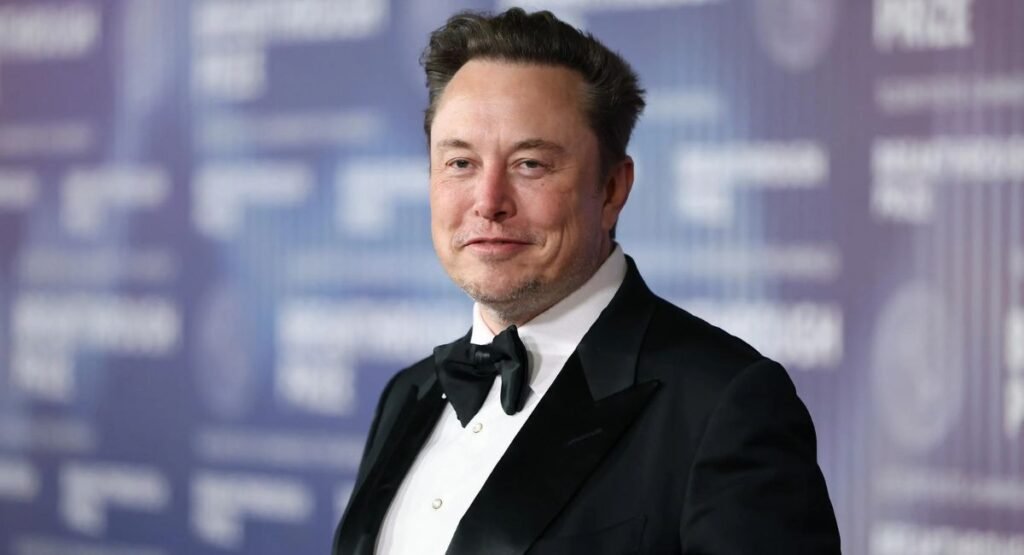
Quick Summary: The life story of elon musk is a polarising saga of brilliant engineering mixed with relentless public conflict. While critics question where did elon musk get his start and debate what is elon musks background, the world remains obsessed with his high-stakes moves—from asking when was elon musk born to watching his wild wealth swings. Whether analyzing at which age elon musk started his first company or examining his legal clashes with regulators and board members, Elon Musk’s career redefines how a tech mogul operates in the modern era.
What is Elon Musk’s Net Worth?
As of 2026, Elon Musk is widely recognized as one of the richest individuals in the world, with an estimated net worth of $864 billion. His wealth primarily comes from his significant ownership stakes in Tesla, SpaceX, xAI, Neuralink, The Boring Company, and X. Because the value of these companies changes with market conditions and private valuations, his net worth fluctuates regularly.
Musk’s extraordinary wealth reflects the global success of his businesses and their leadership in electric vehicles, commercial spaceflight, artificial intelligence, satellite internet, and advanced engineering. His continued investments in innovation and emerging technologies ensure that he remains one of the world’s most influential billionaire entrepreneurs, inspiring future generations of business leaders, engineers, and technology innovators.
Early Life, Education & Roots in South Africa
The life story of elon musk is one of the most widely followed sagas in modern tech history, but to truly understand his aggressive management style and high risk tolerance, one must look closely at where did elon musk get his start. For readers curious about when was elon musk born, he was born on June 28, 1971, in Pretoria, South Africa, into a divided household following his parents’ divorce. Growing up as an introverted and intensely curious child, he spent much of his youth reading science fiction and self-teaching computer programming, eventually creating and selling his first working video game code, Blastar, at just 12 years old.
His early academic journey led him through Pretoria Boys High School, a prestigious yet tough institution where he faced intense social isolation and severe physical bullying—including a infamous incident where he was thrown down a flight of concrete stairs and hospitalized. Biographers frequently point to this hostile childhood environment as the catalyst that forged his unrelenting, survivalist operational mindset. Seeking greater economic opportunities and explicitly wanting to avoid compulsory military service in South Africa’s apartheid era, he used his mother’s heritage to secure a Canadian passport and leave the country at age 17.
For anyone researching what is elon musks background or elon musk education background, his academic path to North America was entirely strategic. He initially enrolled at Queen’s University in Ontario in 1989 before transferring to the University of Pennsylvania, where he earned dual Bachelor’s degrees—a B.S. in Economics from the Wharton School and a B.A. in Physics. In 1995, he moved to California to pursue a Ph.D. in Applied Physics at Stanford University, but in a quintessential move that defined his career, he dropped out after just two days to jump straight into the booming internet landscape..
Family Background
Elon’s father, Errol Musk, was an engineer and real estate developer.
His mother, Maye Musk, was a model and a registered dietitian originally from Canada. Elon Musk has a younger brother, and a younger sister, Kimbal Musk Tosca Musk.
His parents separated when he was young, and he spent much of his childhood living with his father before striking out on his own.
Childhood Interests
From an early age, Elon exhibited a strong sense of curiosity and a passion for acquiring knowledge. He spent hours reading science fiction, fantasy, and encyclopedias. He became interested in computers around the age of 10 and taught himself how to program using books.
At just 12 years old, he created a simple video game called *Blastar* and sold its source code to a computer magazine for about $500. This was an early sign of his entrepreneurial spirit.
Early Education
Elon Musk went to a few schools in South Africa, like Waterkloof House Preparatory School, Bryanston High School, and Pretoria Boys High School.He was smart but quiet, and he has said that he was sometimes teased at school.
Move to North America
At age 17, Elon moved to Canada to avoid mandatory military service in South Africa and because he believed there were better opportunities in North America.
He first studied at Queen’s University for two years and then transferred to the University of Pennsylvania, where he earned degrees in physics and economics.
These studies helped prepare him for his future work in the fields of technology, energy, transportation, and space exploration. Key facts
– Birth: June 28, 1971
– Place of birth: Pretoria, South Africa
– First computer program: At age 12
– First business success: Sold the game Blastar for about $500
– Move to Canada: At age 17
– University degrees: Physics and Economics from the University of Pennsylvania
Elon’s early interest in computer science, engineering, and science fiction greatly influenced the goals that led him to found and lead companies in the fields of software, electric vehicles, and space technology.
Elon Musk’s Business Journey
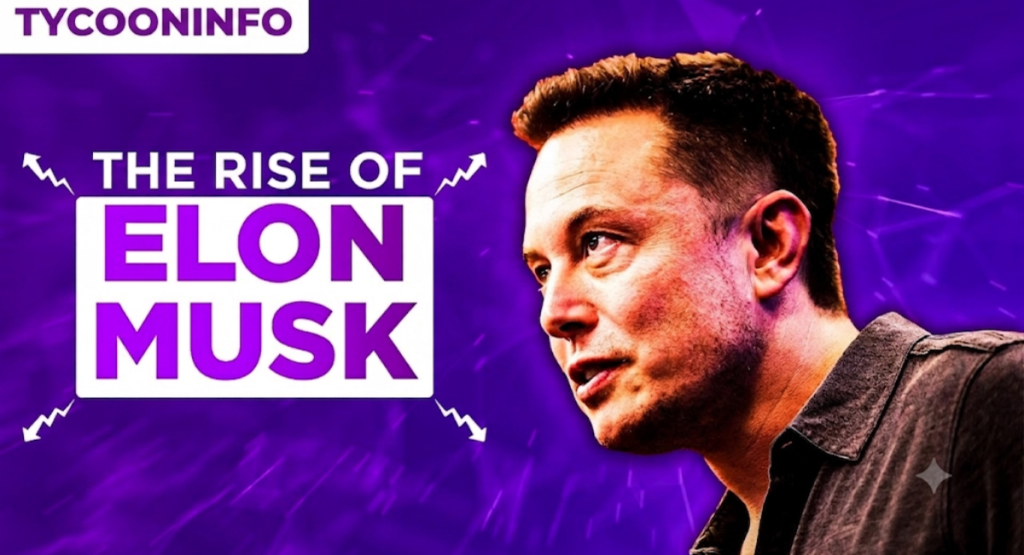
The First Venture (Zip2):
At age 24 (1995), Musk launched Zip2 with his brother Kimbal. Although Compaq acquired it for nearly $300M in 1999, board members famously ousted Musk as CEO over management disputes.
What was Zip2?
Zip2 was a website that allowed newspapers to display maps, business listings, and directions online.
At the time, the web was new, so it was a clever and innovative idea.
How it started
Elon Musk, alongside his brother Kimbal, established the company by investing their own funds and securing support from initial investors.
Elon programmed most of the software himself and worked incredibly hard, sometimes sleeping at the office to save money.
Success
Zip2 partnered with major newspapers such as The New York Times and the Chicago Tribune.
In 1999, Compaq acquired Zip2 for approximately $307 million.
Elon Musk received approximately $22 million from the sale, which he then used to found X.com, the online bank that later became PayPal.
Zip2 marked the beginning of Elon Musk’s entrepreneurial career and provided him with the necessary capital to fund future projects such as PayPal, SpaceX, and Tesla.
X.com and PayPal (1999-2002)
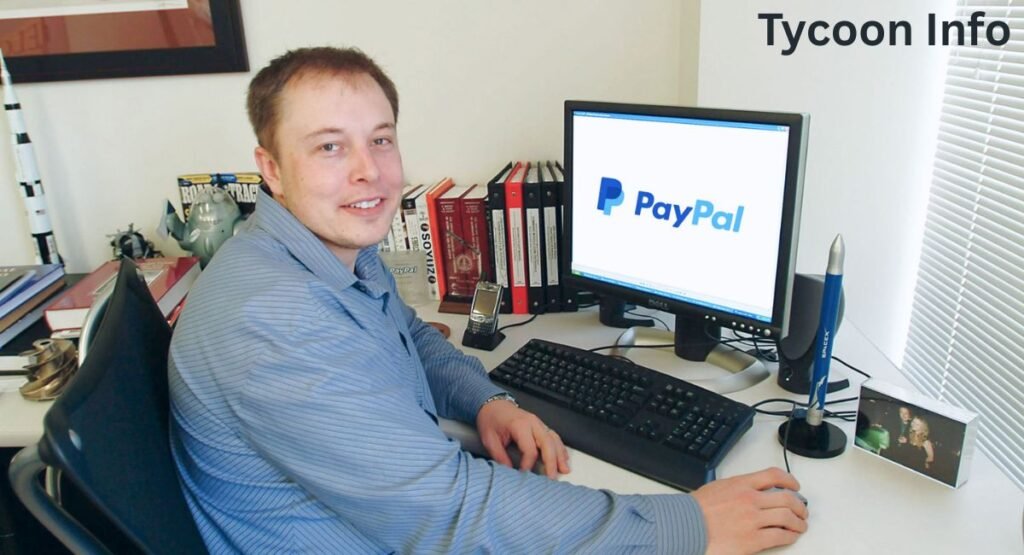
Following Zip2’s success, Musk invested a significant portion of his money in a new company called X.com, an online financial services company founded in 1999.
At the time, online banking was not commonplace, so X.com aimed to simplify sending money and managing finances over the internet. In 2000, X.com merged with Confining, the company that had created the PayPal electronic payment system. The new company changed its name to PayPal and quickly became a trusted way to make online payments. PayPal made online payments simple and secure for millions of people, fueling the growth of e-commerce. In 2002, eBay acquired PayPal for $1.5 billion, and the proceeds from the sale helped Musk fund his next major projects.
SpaceX (2002)
In 2002, Elon Musk founded SpaceX, a company that aimed to reduce the cost of space travel and contribute to the search for life on other planets.
Similar to Jeff Bezos, Elon Musk has invested billions of dollars in commercial space exploration and reusable rocket technology. Although their companies have different approaches, both entrepreneurs share a long-term vision of expanding humanity’s future beyond Earth.
At first, many believed that a private company couldn’t succeed in the space industry. But Musk remained steadfast in his dream. After several failed launches, SpaceX achieved its goal with the Falcon 1 rocket in 2008, becoming the first private company to send a liquid-fueled rocket into space. Since then, SpaceX has developed rockets such as the Falcon 9 and Falcon Heavy, the Dragon spacecraft, and the Starship system. The company has sent cargo and astronauts to the International Space Station, launched thousands of Starlink satellites, and is working on future missions to the Moon and Mars. Today, SpaceX is one of the leading aerospace companies and has revolutionized space exploration with its reusable rocket technology.
Tesla (2004)
Elon Musk joined Tesla Motors in 2004 as a major investor and later became the company’s Chief Executive Officer (CEO). Under his guidance, Tesla evolved from a fledgling electric vehicle company into one of the most valuable automotive firms globally. Tesla’s mission is to accelerate the world’s transition to sustainable energy by producing high-performance electric vehicles and clean energy solutions. The company introduced popular models such as the Model S, Model 3, Model X, and Model Y, making electric vehicles more practical and accessible for consumers worldwide. Beyond automobiles, Tesla also develops advanced battery storage systems, solar panels, and energy products that support renewable energy. Through continuous innovation in autonomous driving technology, battery efficiency, and vehicle manufacturing, Tesla has significantly influenced the global automotive industry and encouraged other manufacturers to invest in electric transportation.
Like Larry Page, Elon Musk believes that technology and innovation can solve some of the world’s biggest challenges. Both entrepreneurs have invested heavily in artificial intelligence and future technologies that continue to shape the modern digital world.Like Larry Page, Elon Musk believes that technology and innovation can solve some of the world’s biggest challenges. Both entrepreneurs have invested heavily in artificial intelligence and future technologies that continue to shape the modern digital world.
Current Businesses and Activities
Today, Elon Musk is one of the world’s most influential technology entrepreneurs, business leaders, and innovators. He leads several groundbreaking companies that are transforming industries such as electric vehicles, space exploration, artificial intelligence, robotics, renewable energy, and brain-computer interface technology.
Musk serves as the CEO of Tesla, where he oversees the development of electric vehicles, battery technology, autonomous driving systems, and clean energy products, including solar panels and energy storage solutions. Tesla continues to invest heavily in Full Self-Driving (FSD) technology, advanced robotics, and the Optimus humanoid robot, which is designed to assist in manufacturing, logistics, and everyday tasks.
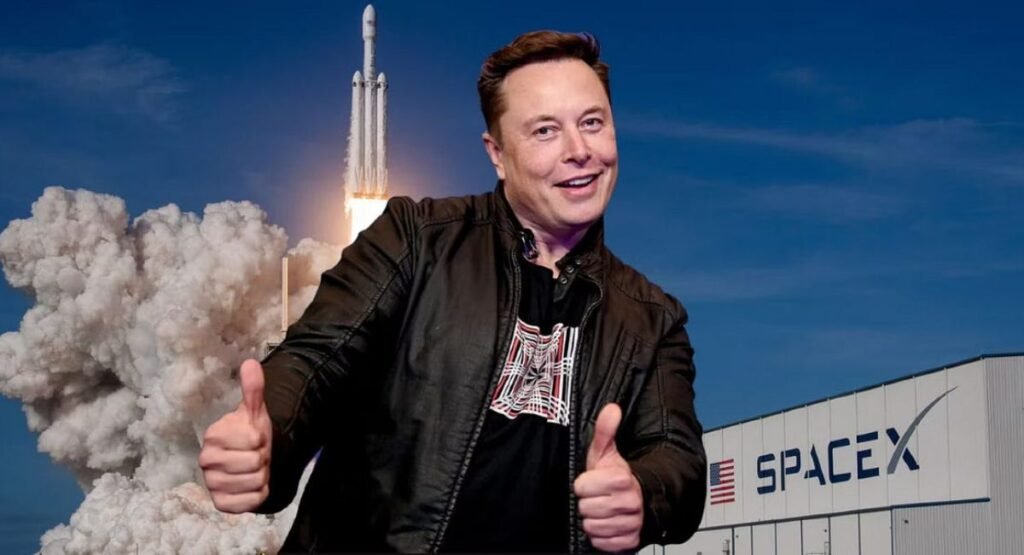
As the founder and CEO of SpaceX, Musk continues to advance reusable rocket technology and human space exploration. The company operates the Falcon 9 and Falcon Heavy rockets while continuing to develop Starship, the world’s largest and most powerful reusable launch system. SpaceX is also expanding its Starlink satellite network, which provides high-speed internet services to millions of users worldwide, including people living in remote and underserved regions. Musk’s long-term vision is to establish a permanent human settlement on Mars, believing that becoming a multi-planetary species is essential for humanity’s future.
In 2023, Musk launched xAI, an artificial intelligence company focused on developing advanced AI systems that are transparent, safe, and capable of accelerating scientific discovery. The company introduced its AI chatbot Grok, which continues to receive new features and compete with other leading AI assistants. xAI is also investing in large-scale AI infrastructure and high-performance computing to support future AI research. Like Sergey Brin and Larry Page, Musk sees artificial intelligence as one of the most important technologies of the future.
Net Worth Volatility & The 2026 Trillionaire Controversy
Elon Musk’s net worth isn’t just massive—it is unprecedentedly chaotic:
- First Trillionaire Record: In mid-2026, following the historic Wall Street debut of SpaceX, Musk briefly became the world’s first $1 Trillion man.
- Historic Wealth Loss: Massive market shifts and volatile SpaceX valuation swings erased hundreds of billions shortly after, marking one of the largest single wealth drops recorded in financial history.
- Pay Package Lawsuits: Musk’s record-breaking $1 Trillion Tesla pay package sparked fierce shareholder litigation, raising ethical questions about corporate governance.
Frequently Asked Questions (FAQs)
1. Who is Elon Musk?
Elon Musk is a billionaire entrepreneur, engineer, and investor best known as the CEO of Tesla and SpaceX. He is also the founder or leader of companies including xAI, Neuralink, The Boring Company, and X (formerly Twitter).
2. When was Elon Musk born and how old is he?
Elon Musk was born on June 28, 1971, in Pretoria, South Africa.
3. What is Elon Musk famous for?
Elon Musk is famous for leading innovative companies in electric vehicles, space exploration, artificial intelligence, satellite internet, and renewable energy. His work with Tesla and SpaceX has made him one of the world’s most influential technology entrepreneurs.
4. At what age did Elon Musk start his first company?
Elon Musk launched his first company, Zip2, in 1995 at the age of 24. first major business was Zip2, an online city guide software company that he co-founded with his brother, Kimbal Musk, in 1995. Zip2 was later sold to Compaq for approximately $307 million.
5. Is Elon Musk the founder of PayPal?
Elon Musk founded X.com, an online financial services company. After X.com merged with Confinity, the business became PayPal, which was later acquired by eBay in 2002.
6. What is Elon Musk’s educational background?
Musk graduated from Pretoria Boys High School and earned dual Bachelor’s degrees in Physics and Economics from the University of Pennsylvania.
7. What is Elon Musk’s Net Worth in 2026?
Following SpaceX’s market developments, Musk’s net worth hovers between $800 Billion and $1.3 Trillion, holding his title as the richest individual on earth despite extreme market volatility.
8. What is Elon Musk’s goal for Mars?
Elon Musk’s long-term goal is to establish a self-sustaining human settlement on Mars using SpaceX’s Starship spacecraft, helping make humanity a multi-planetary species.
9. What is xAI?
xAI is Elon Musk’s artificial intelligence company, founded to develop advanced AI systems and accelerate scientific discovery while promoting responsible AI development.
10. Why is Elon Musk considered influential?
Elon Musk is considered influential because his companies have transformed industries, including electric vehicles, reusable rockets, satellite internet, artificial intelligence, robotics, and clean energy. His innovations continue to shape the future of technology and inspire entrepreneurs around the world.
Welcome to Tycoon info! I’m Malik , an SEO specialist, and content writer with 6 years of experience.
I help websites rank higher, grow traffic, and look amazing. My goal is to make SEO and web design simple and effective for everyone.
Let’s achieve more together!